
Over a dozen mutual fund houses in India have temporarily suspended fresh subscriptions in their gold fund of funds (FoFs) and gold-silver FoFs, a move believed to be influenced by directions from the Securities and Exchange Board of India (Sebi) ahead of the festive season.

Investments into gold exchange-traded funds (ETFs) slowed in October, attracting an estimated net investment of about 3,300 crore, down from a seven-month high of 4,450 crore in September. This decline coincided with most asset management companies (AMCs) suspending subscriptions to their gold fund of funds (FoFs) in the latter half of the month, following a Sebi directive amid concerns over rising gold imports and pressure on the rupee.

New investors should avoid a lumpsum investment after last year's big rally. Limit gold to 5 to 10 per cent of the portfolio and hold for 5 to 10 years.

India's gold smuggling has surged more than 16-fold to 50 tonnes in Q3 2026 after the government raised import duty to 15 per cent, making the grey market increasingly attractive and hurting organised jewellery players.

Indian jewellers reported robust demand for gold and silver on Dhanteras, with gold sales by value estimated to increase by 15-20 per cent to approximately Rs 60,000 crore, driven by a recent drop in prices. However, volumes are expected to remain flat compared to last year due to overall higher price levels.

Equity mutual fund schemes recorded a net inflow of Rs 38,306 crore in September, a 31 per cent increase from the previous month, driven by strong investor interest in mid-cap and small-cap funds despite stock market volatility and foreign portfolio investor (FPI) sell-offs.

Commodities experienced significant volatility in Samvat 2082, with crude oil emerging as a major gainer due to the US-Iran conflict, while gold and silver surrendered much of their earlier rallies, driven by geopolitical tensions, supply disruptions, and shifting interest rate expectations.

Investor interest in precious metal exchange-traded funds (ETFs) rebounded sharply in June, with silver ETFs attracting an estimated 4,900 crore and gold ETFs around 2,900 crore in net inflows, following a significant correction in gold and silver prices.
The case for long-term investment in gold, however, remains intact.

Investors should cap gold allocation at 10-15 per cent and consider staggered purchases through gold ETFs.
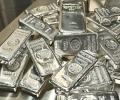
Silver and gold prices snapped a two-day rebound and declined sharply up to 10 per cent in the futures trade on Thursday amid weak trends in the international markets and a strong US dollar.

Equity-oriented mutual fund schemes in India experienced a 5 per cent decline in net inflows in April, reaching Rs 38,440 crore, while monthly Systematic Investment Plan (SIP) contributions also saw a decrease.

'In the past, when the Indian markets have been flat for two years, the next year's returns have ranged between 5 per cent and 55 per cent.'

A new report by Motilal Oswal Financial Services Ltd (MOFSL) indicates that inflation, interest rates, and monetary policy have become more significant drivers of gold prices than traditional geopolitical conflicts, with markets increasingly focusing on these economic factors.

'Allocating 5 to 10 per cent of one's portfolio and staying disciplined through market cycles helps in having a positive investment experience.'

The highlight in January, with no surprise, has been flows into gold and silver ETFs.

'It has always been viewed as a hedge against inflation.'

Equity mutual funds attracted Rs 29,911 crore in November, marking a 21 per cent increase from the preceding month, according to data released by industry body Amfi on Thursday. This rise in inflows comes after three consecutive months of decline, signalling an improvement in investor sentiment.

Domestic gold exchange-traded funds (ETFs) saw their holdings jump 65 per cent to 95 tonnes in 2025, elevating Indian ETFs to sixth place globally, going by holdings of the yellow metal. At the end of 2024, they ranked eighth with 57.5 tonnes of holding, according to an analysis of data from the World Gold Council (WGC).

A significant structural shift is underway in India's gold market, with investment purchases projected to account for 35-40 per cent of total consumption by FY27, driven by geopolitical uncertainty, price momentum, and portfolio diversification.

Passive funds have resumed gaining ground in the mutual fund (MF) industry after a slowdown in 2024, with their share of assets under management (AUM) reaching an all-time high in 2025. The surge has been driven largely by robust inflows into gold and silver exchange-traded funds (ETFs).

'Regulations give a particular minimum amount of shares to be given in the OFS or IPO -- without which one cannot do the IPO.' 'We got that number on the day of filing of updated DRHP -- sufficient for us to go live with the IPO.'
Analysts predict a surge in gold and silver prices as investors seek safe-haven assets due to escalating tensions in the Middle East. The impact on domestic prices will depend on the conflict's duration, with geopolitical factors and macroeconomic data also playing a role.

Gold and silver prices experienced a significant drop in the national capital due to a global selloff driven by inflation concerns, central bank policies, and geopolitical tensions.

Analysts say long-term investors may still benefit, but recommend limiting bullion exposure to around 10 per cent.

The scheme will invest in gold exchange-traded funds of all Sebi-approved mutual funds, along with capital protection.

With the listing of Reliance gold ETF on the National Stock Exchange (NSE) on Wednesday, four fund houses (Benchmark, UTI Mutual Fund and Kotak Mutual Fund being the other three) currently offer gold ETFs to Indian investors.

'We expect modest returns in 2026 versus the steep gains seen over the past few years.'
UTI Mutual Fund recently launched Gold Exchange Traded Funds and many more companies plan to follow suit. Get the lowdown.
Gold exchange-traded funds are back in the limelight. After a dull three-month period, a sudden slump in the US stock market last week has investors flocking to buy gold. In the past one week alone, gold prices have increased nearly 15 per cent in the international market.
ilver continues to outperform the yellow metal, with the gold-to-silver price ratio declining to its lowest level since 2013. The ratio fell to around 57 on Wednesday in the international market, from a five-year high of 100.8 at the end of April 2025.

The new fund, which is different from gold exchange traded funds that require subscribers to have a demat account, will also offer investors the option to invest as little as Rs 100 per month, the company said in Mumbai.
In the last five years, while gold prices appreciated 55.8% in dollar terms, in rupee terms, returns stood at 129%, primarily owing to the falling rupee.

Direct plans of mutual fund schemes added nearly 21 million individual investor folios in FY26 (as of February), surpassing regular plans' 15 million net additions, marking only the second time direct plans have outpaced regular plans in annual folio growth, despite turbulent equity markets.
For the beginners, this is a step-by-step process. First and foremost you will need to open a demat account with a depository participant before opening an account with a broker. To find out more, read on...

Gold ETFs attracted around Rs 11,700 crore, the highest in a calendar month.

India has emerged as the most impacted market within emerging economies, experiencing $3.7 billion in outflows over the past three weeks, matching the total outflows from the entire emerging market basket, as global equity funds turn negative for the first time since January 2026 due to escalating geopolitical tensions.

The gold and silver holdings of domestic mutual funds (MFs) crossed the Rs 1 trillion mark for the first time in September, powered by a blistering commodity rally that lifted precious metal prices and drew fresh inflows into dedicated MF schemes.
